




AI Visibility
Finally, AI visibility built for the enterprise
Get thousands of buyer questions, run natively in every engine, country and market you sell in, analyzed and translated into actionable insights. So your brands get cited and recommended by AI.
Trusted by Global CMOs & Fortune 500 Brands















Our Platform
Complete AI visibility infrastructure
for global brands.
One connected process that goes from real questions to answers you can act on.

Where Our Prompt Data Comes From
- Real prompts people typed into AI engines, from licensed, representative consumer panels.
- What people browsed and bought, so the questions follow real buying behaviour.
- Large-scale search volume, used to weight each topic by how often it's asked.
- The questions your own customers already ask, from Search Console and site search.
- Hero products, launches and key rivals, covered whatever their search volume.
Tap a topic for details.
How We Define Your Coverage
- Every question runs in each market's own language, from in-market locations.
- Each question is tagged with the persona most likely to ask it.
- Questions that ask the same thing in different words are grouped by intent.
- Coverage spans discovery, comparison and purchase, so no stage is missed.
- Branded and unbranded questions, mixed to match how people search.
- No limit on questions, brands, markets, languages or competitors.
Tap a topic for details.
What Keeps Your Measurement Consistent
- Your product facts, pricing bands and authorised retailers, set up with your strategist at onboarding.
- The claims you stand behind, and the ones that must never be made, to check AI answers against.
- Every brand, sub-brand, hero product, alias, translation and local name, mapped so nothing is miscounted.
- The same core questions every week, so this quarter compares cleanly with last.
- The set is refreshed once a quarter, within a change limit you agree.
- Every version of your question set is recorded and available to you.
- You see every question in your set and can exclude anything out of scope.
Tap a topic for details.
Where We Track Your Visibility
- ChatGPT, Google AI Overviews, Google AI Mode, Gemini, Perplexity, Claude, Copilot, Grok, DeepSeek, Qwen, Mistral and Naver.
- US, UK, France, Germany, Italy, Spain, Brazil, Mexico, Japan and South Korea, each in its own language.
- Questions run in each market's own language and interface, the way local buyers ask them.
- Runs come from in-market locations, so the answers match what local buyers see.
- Each engine is reported on its own, because each cites its own mix of sources.
- One roll-up across engines when you need a single view, with the split always alongside it.
Tap a topic for details.
How We Run Every Measurement Cycle
- Nothing is sampled. Every question runs against every engine in every cycle.
- All engines and markets run in the same cycle, so each week's numbers compare cleanly.
- Each run produces one dated snapshot you can compare with any previous week.
- Each brand, market and language runs on its own, so adding one never changes another.
- Each market keeps its own questions, competitors and results, then rolls up to HQ.
Tap a topic for details.
What Makes Your Results Verifiable
- Answers vary from one ask to the next, so we read groups of questions, never a single prompt.
- A change is reported only once it's statistically meaningful, so normal volatility never reads as a trend.
- The exact question and the complete answer are stored for every run.
- Every answer records which engine produced it, and the model version where the engine discloses it.
- Every source an answer cites is captured, down to the page.
- Each answer is stamped with the date and run it came from.
- Failed captures are retried and marked, so a gap never looks like a drop.
- Engine updates and method changes are recorded, so trends stay comparable over time.
Tap a topic for details.
What Explains Your Visibility Changes
- How you perform on each engine, shown separately, because each cites its own sources.
- How competitors moved on the same questions in the same week.
- The share of your visibility that traces back to each source.
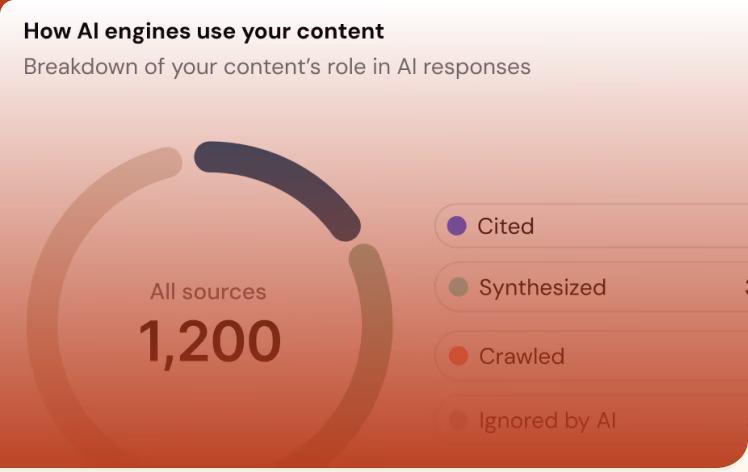
- Which of your pages AI cites, crawls, synthesises or ignores.
- Every gap ranked by impact, with a page edit list or brief attached.
- When you need certainty, a dedicated test with a control group.
- We show what changed after your work and how closely it lines up, never presented as proof of cause.
Tap a topic for details.
How AI Presents Your Brand
- The answer is built mainly on you.
- You're covered in detail, with your products or features laid out.
- You're mentioned in support of the answer, not as its focus.
- You appear late or in passing, where few readers will notice.
- How AI describes you, compared with your approved messaging and key descriptors.
- Answers that say something about you that must never be said.
Tap a topic for details.
What AI Gets Wrong About You
- Incorrect specs, ingredients, sizes, shades or launch dates.
- Old prices, discontinued products shown as available, or the wrong markets.
- Brands credited to the wrong founder, parent company or group.
- A competitor's product or claim credited to you, or yours to them.
- Answers that send buyers to sellers you don't authorise.
- Sustainability, efficacy or performance claims you never made.
- Critical, high, medium or low, weighted by how many engines repeat the error.
Tap a topic for details.
Brandlight turns AI visibility into action
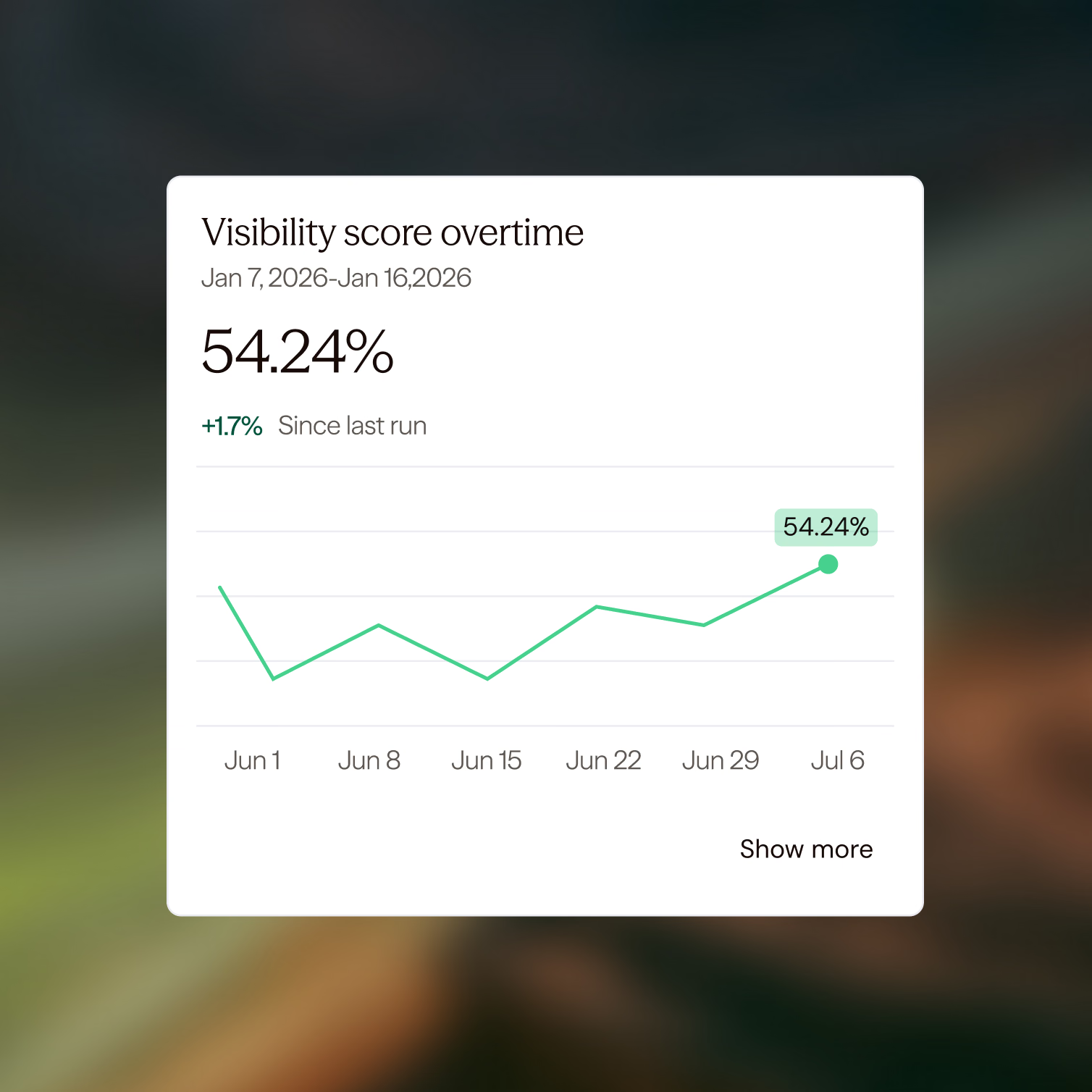
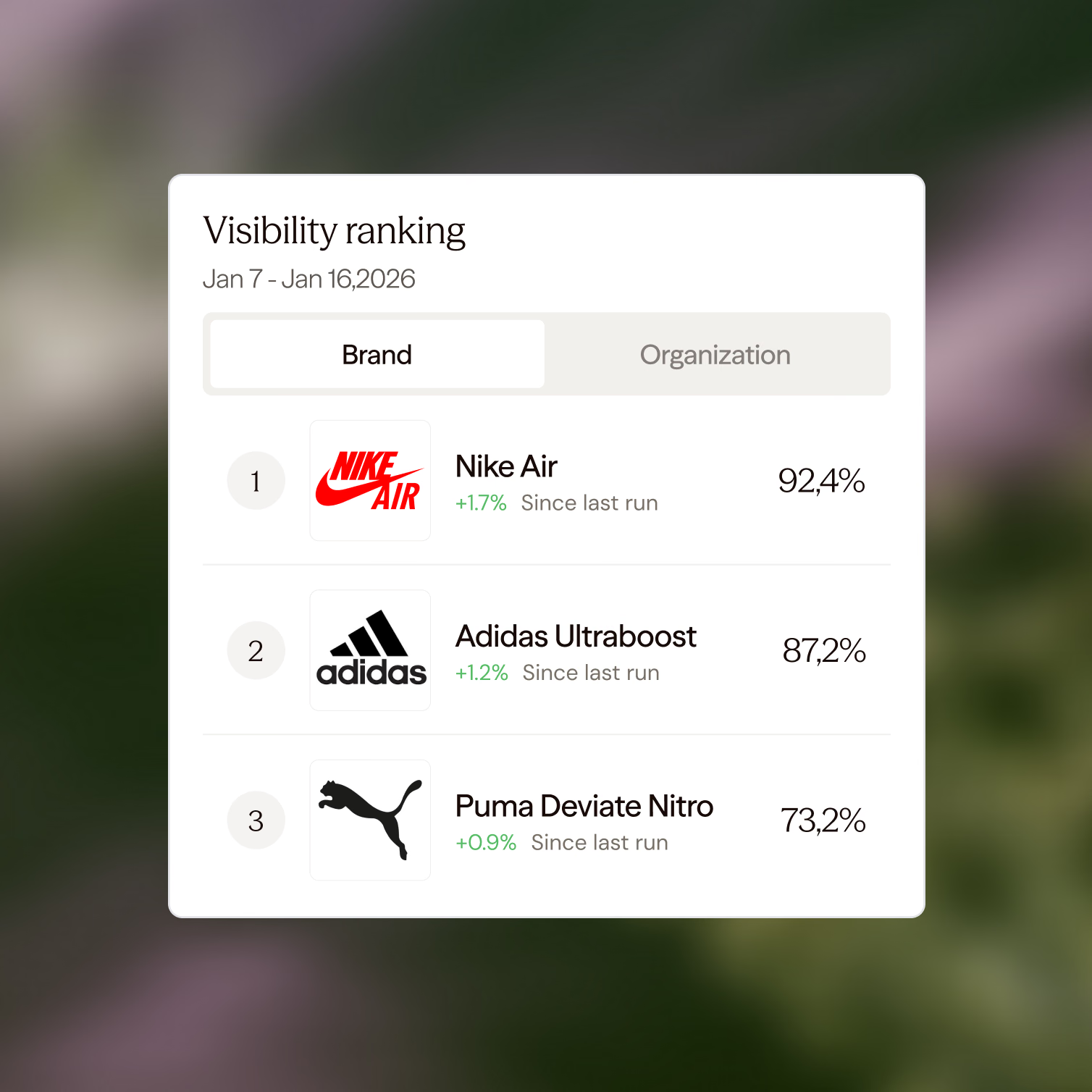
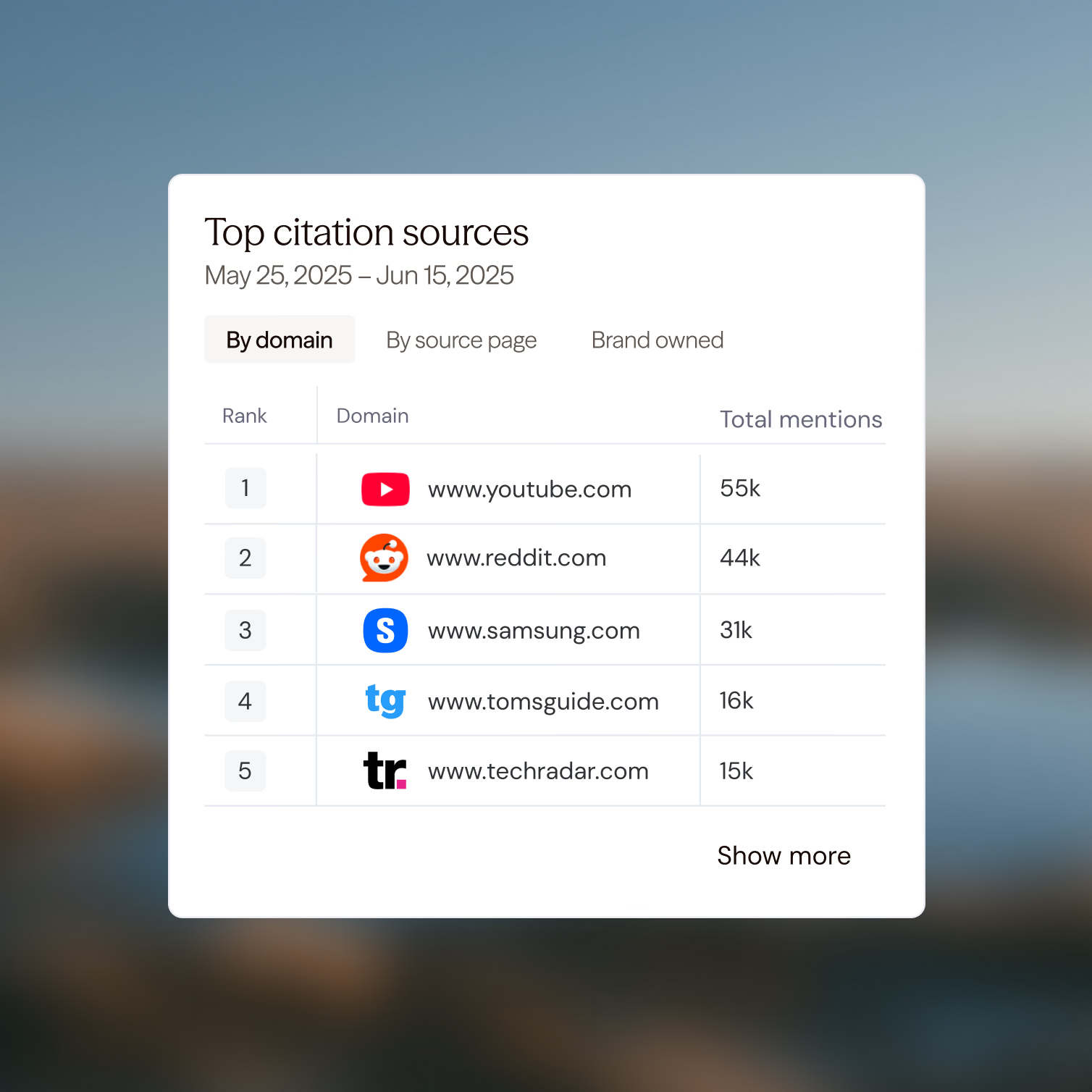
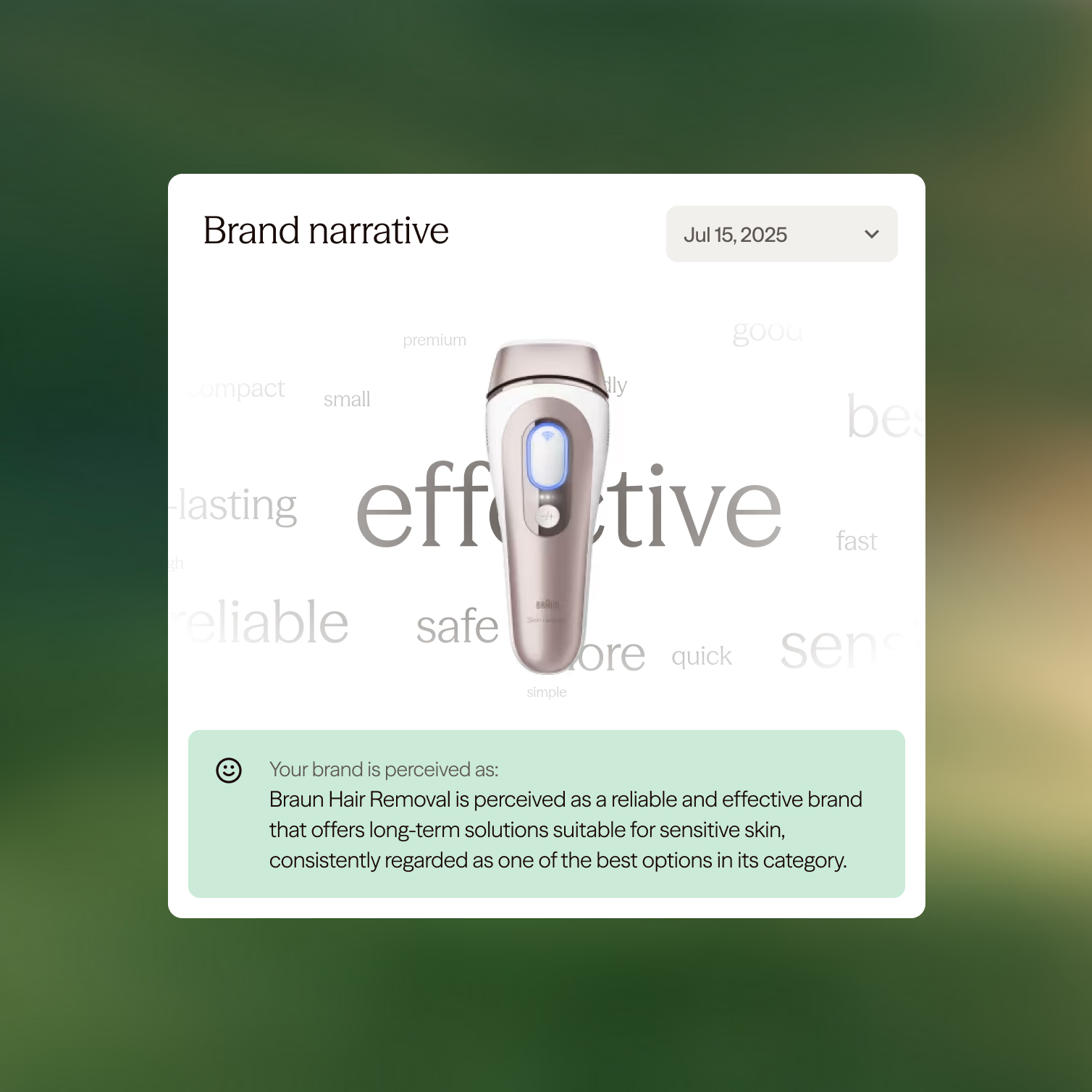
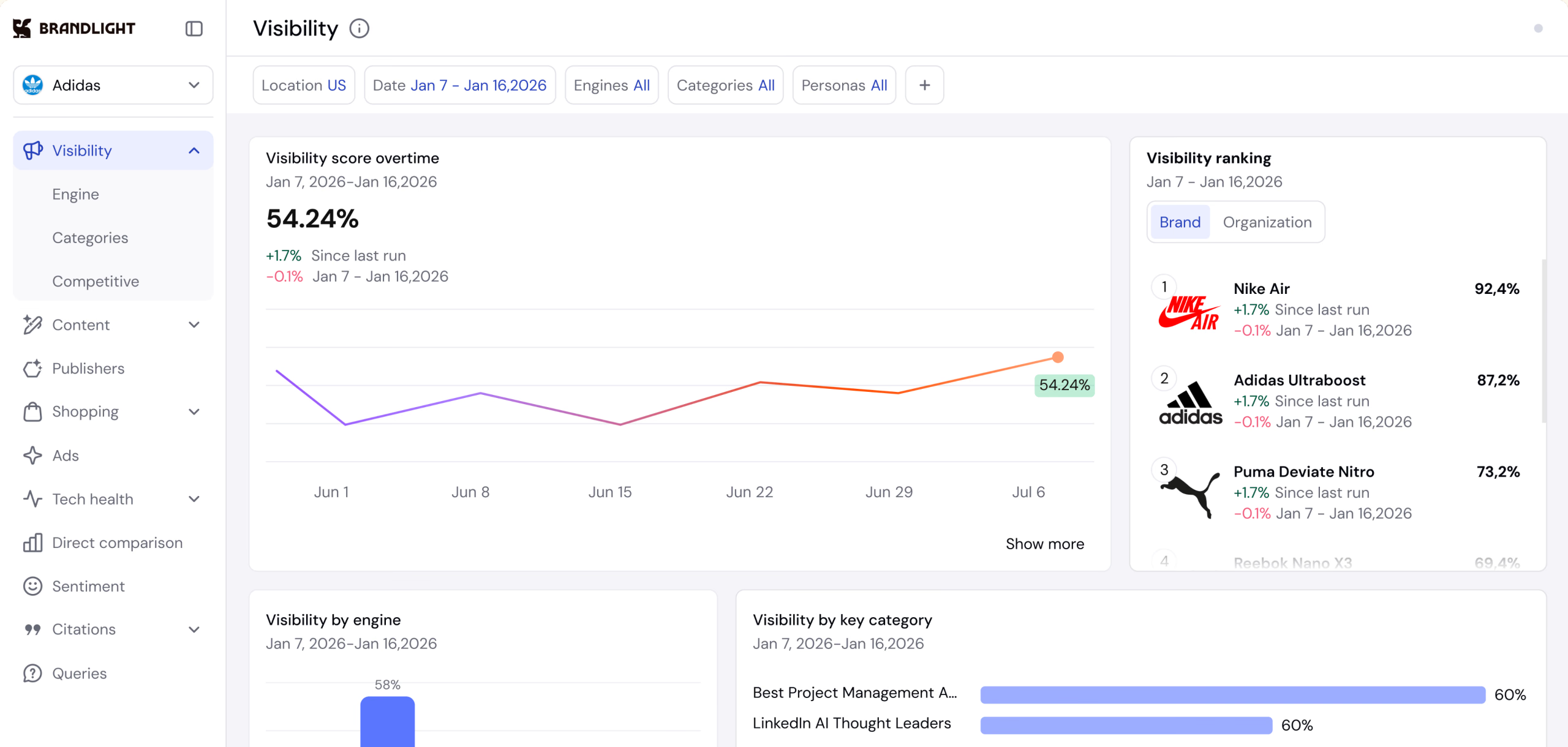
See where you stand per engine and category. Built and weighted on thousands of real questions, so the score reflects your buyers.
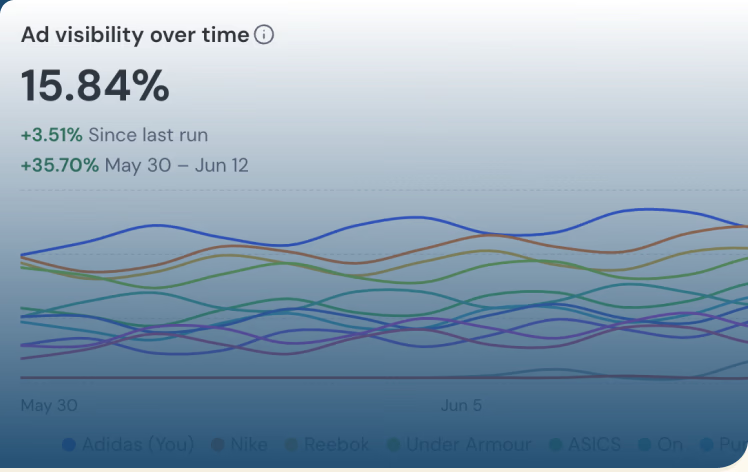
Track any rival's score next to yours. So you can tell exactly who you're losing to, and what to do about it.
Stop guessing why your AI visibility score moved. See which sources influence each answer, and how.
See tone per topic, engine and market, so you can trace every negative narrative back to its source.
You shouldn't just get another layer of data
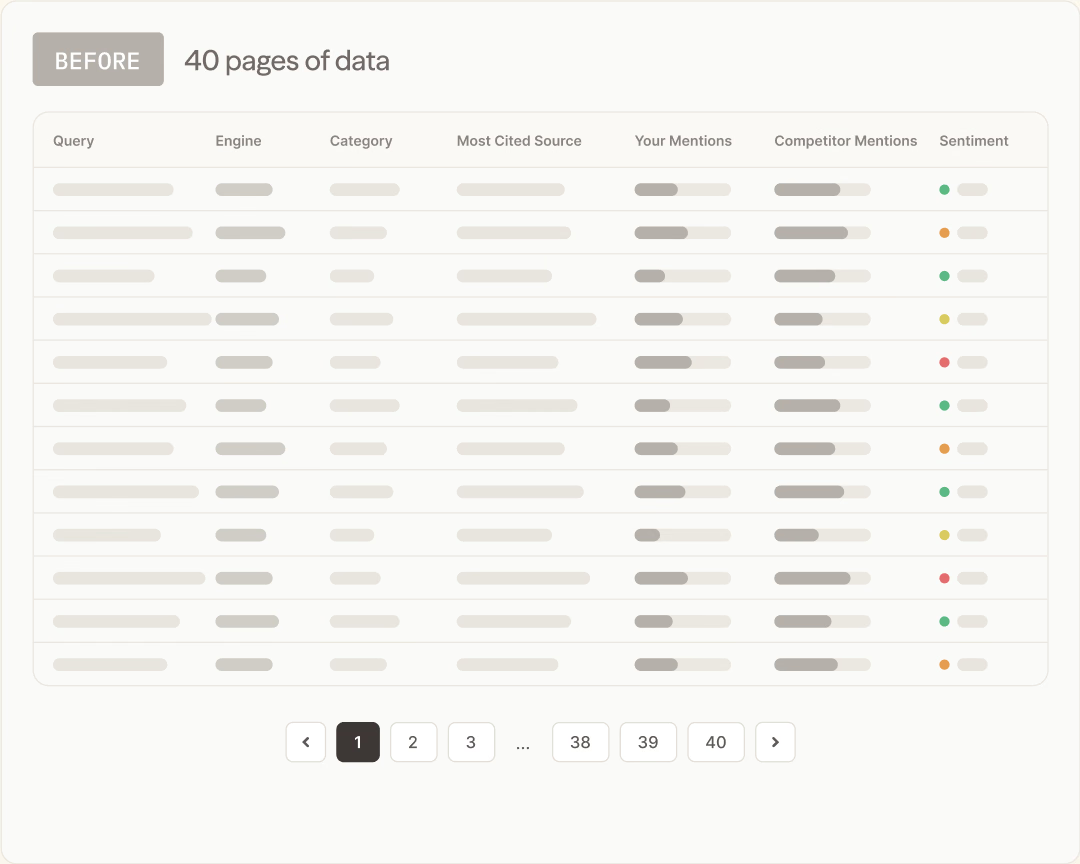
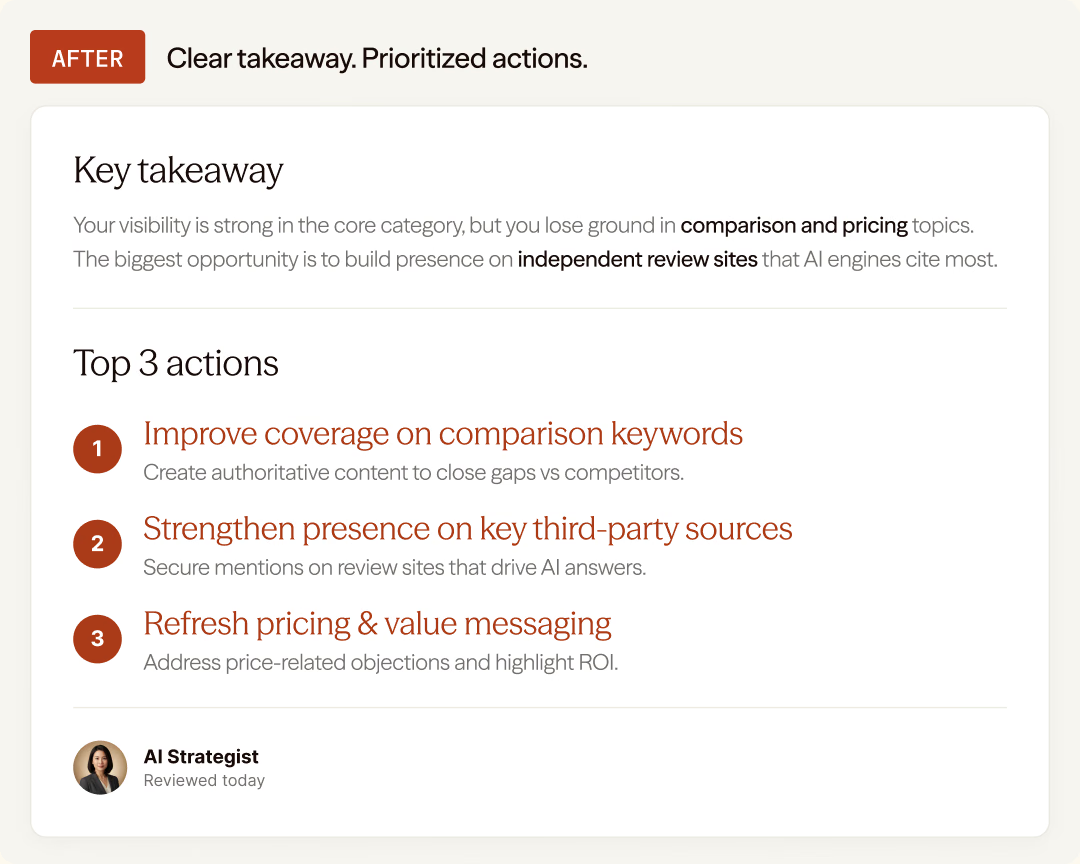
Stop digging through 40 pages of data. Get a dedicated AI strategist who tells you what the numbers mean and what to do next.


 Brand Entity
Catch the facts AI gets wrong about your brands
Wrong prices or policy. Wrong parent company or claims that you never made. Found where customers actually see them, traced to the source, and fixed with you.
 HQ
One global view as more regional teams come online
Each brand, market and language runs its own instance. HQ rolls them up, so enterprise and local work together instead of pulling in different directions.
The scoreboard is the first part.
Here's what to do about it.

What marketing leaders love about Brandlight


With Brandlight, we gain full clarity into our AI visibility - transforming insights into measurable growth, smarter positioning, and stronger customer reach.


The Brandlight platform has been essential in providing the visibility we needed and we're highly impressed with the ongoing development of new capabilities and modules within the platform.


With Brandlight, we can finally measure and improve our AI-driven visibility - turning discovery into revenue, competitive edge, and expansion.

Win AI Visibility together
Join the world’s leading enterprises working with Brandlight. Get an actionable platform, proven playbooks, and a dedicated AEO team working with you to turn insights into measurable results.
Loved by the teams using Brandlight
 4.9/5 · 240 reviews
Frequently Asked Questions
How is the question set built, and how do you know it represents our customers?
We build it, you don't. It comes from five sources: hundreds of millions of real prompts observed through licensed consumer panels, clickstream and purchase data, search demand, your own Search Console and site search, and your business priorities. Weighted to actual demand, labelled seven ways, audited quarterly.
Which engines and markets are live today, and what isn't?
Twelve engines: ChatGPT, Google AI Overviews, AI Mode, Gemini, Perplexity, Claude, Copilot, Grok, DeepSeek, Qwen, Mistral and Naver. Ten markets natively, in local language. Mainland China is the gap. We run Qwen and DeepSeek there, not the full domestic set, and we'd rather name that than claim it.
How is this different from the tool we already have?
The scoreboard is table stakes and you'll get one. Three things differ underneath it: we build and own the question set, coverage isn't capped or priced per prompt, and every movement decomposes into the sources behind it.
How do you control LLM variability, and how do you tell a real movement from normal volatility?
The unit is the intent cluster, never the single prompt. One prompt result is one observation and we don't read it on its own. Variability gets captured by running many permutations of each intent, a fixed core panel keeps trends comparable, and changes only surface after significance thresholds.
How do different engines compare, and why don't you give one blended number?
We give both. One weighted score you can take to the board, and the per-engine split underneath it, because the engines cite largely different sources. A blended number on its own hides the thing you need to act on, which is which surface you're actually losing.
What happens to historical trends when a model changes, or when the prompt set changes?
Every run is stored with its engine, model identifier, run ID and timestamp, and the prompt universe itself is versioned. A fixed core panel carries the comparable trend and only the quarterly audit may change it. Any realignment of old and new data gets agreed with you first.
How is sentiment measured, and what do you not claim?
Every mention is classified positive, neutral or negative, in the context of the attribute being discussed. We don't count prestige language as praise: "well-established" or "premium" stay neutral unless the context is genuinely positive. And we make no accuracy claim. Check the sources, not the score.
Who owns the data, and is it used to train models?
You own your first-party data, your prompt libraries and every output we deliver. We own the platform and the anonymised benchmarks. Your data is never used to train third-party models. At contract end you export in CSV or JSON and we delete within thirty days.
What does onboarding actually require from us?
A Search Console export, your competitor list and your brand facts. We build the prompt universe, the entity map and the dashboards from there, and a named strategist runs it with you. Most of the work is ours, which is rather the point.


Ready to Compete in the AI Economy?