
Brandlight updates
Brandlight's ChatGPT Business Hub toolkit for catalogs and agents
Brandlight's new tools turn a client's catalog into a ChatGPT product feed and write Business Agent instructions from AI visibility data.
On November 10, OpenAI launched Businesses in ChatGPT in beta. Brands can now claim a profile, supply their own details, policies and product feed, and see ChatGPT's own data on how it references them. Eligible US ecommerce and online service businesses can also run a Business Agent and point ChatGPT Ads at it.
Within 24 hours, Brandlight had claimed its own profile and shipped the tools our clients need to set up theirs. In a market that moves this fast, speed is part of the product.
It's a major step for AI marketing, and it changes the relationship between brands and AI engines. An AI answer used to end with a link. Now a buyer can move from that answer into a conversation with the brand, without leaving ChatGPT. Discovery and engagement are moving closer together.
The launch changes ownership, not placement
Two things stay the same. Claiming a profile doesn't earn placement: OpenAI states that ChatGPT keeps making its own independent recommendations, and those still decide which brands reach a profile at all.
And ChatGPT's new data looks back. It counts mentions, website clicks and discovery topics over 28 days, on one engine, for your own brand. Brands still need to see what comes next, across engines, markets and competitors.
What changes is ownership. Brand writes the profile. Ecommerce runs the product feed. Customer experience owns the policies the agent quotes. Paid media runs the ads. Legal reviews the terms. Showing up in ChatGPT is now a job for the whole company.
Our role: incubating what comes next
I lead strategic product initiatives at Brandlight, and incubation is part of that work. When the industry shifts, our job is to turn the shift into something our clients can use the same week.
So we claimed our own profile, worked through every screen, and asked what a client would need to get this right. The tools below are the answer.
What we built
The setup guide walks through each step of claiming a profile, with screenshots, from domain and identity verification to the catalog and the agent. It also shows how the Business Hub's metrics line up with Brandlight's.
Catalog Export converts a client's Brandlight Commerce catalog into ChatGPT's product feed format. It checks every product against OpenAI's spec and flags the fields that still need filling.
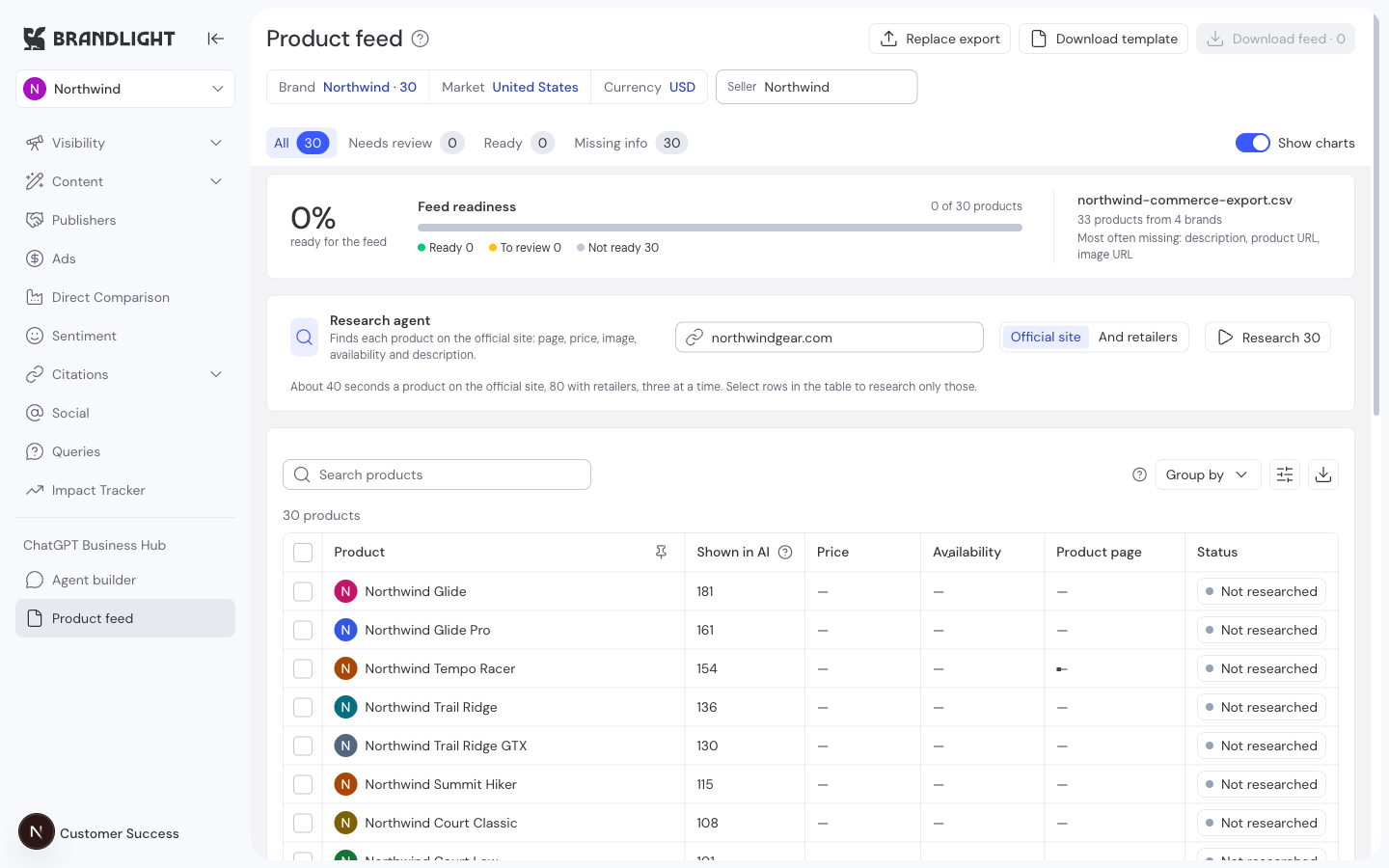
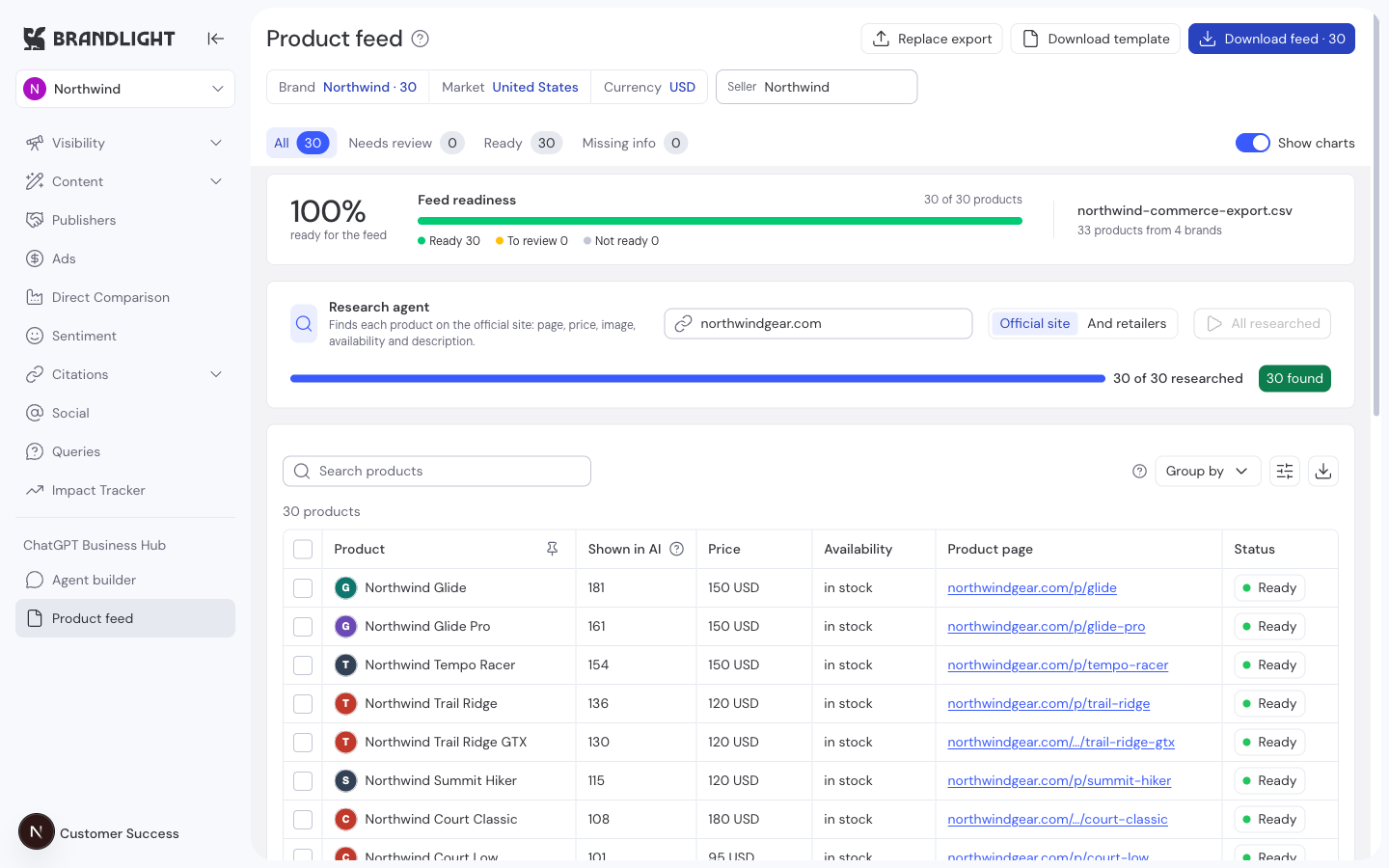
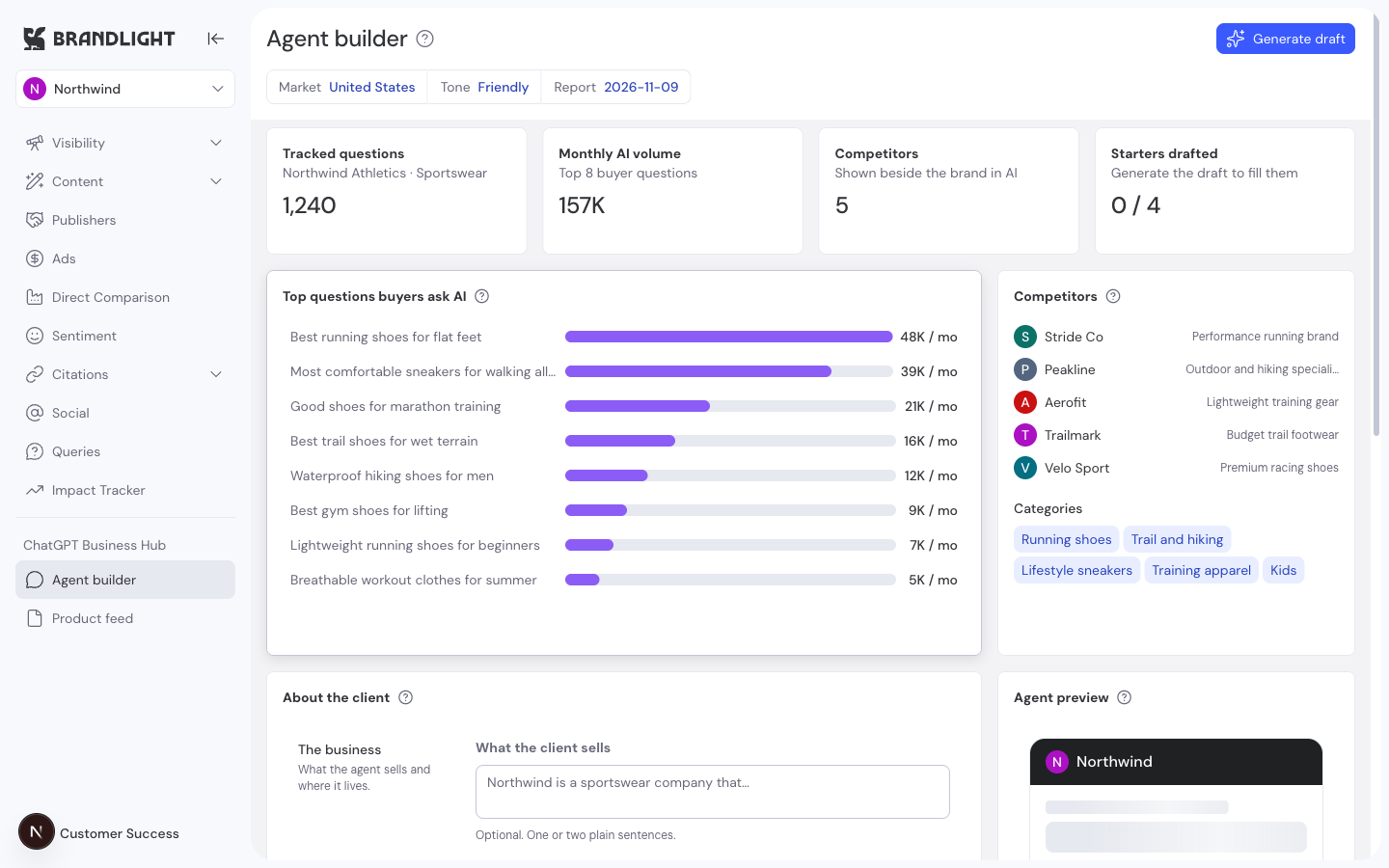
Agent Instructions writes the instructions for a client's Business Agent from Brandlight's citation, visibility and category data. The client sets the goal: sell more from the catalog, reinforce where they're visible, or make their case where they're not.
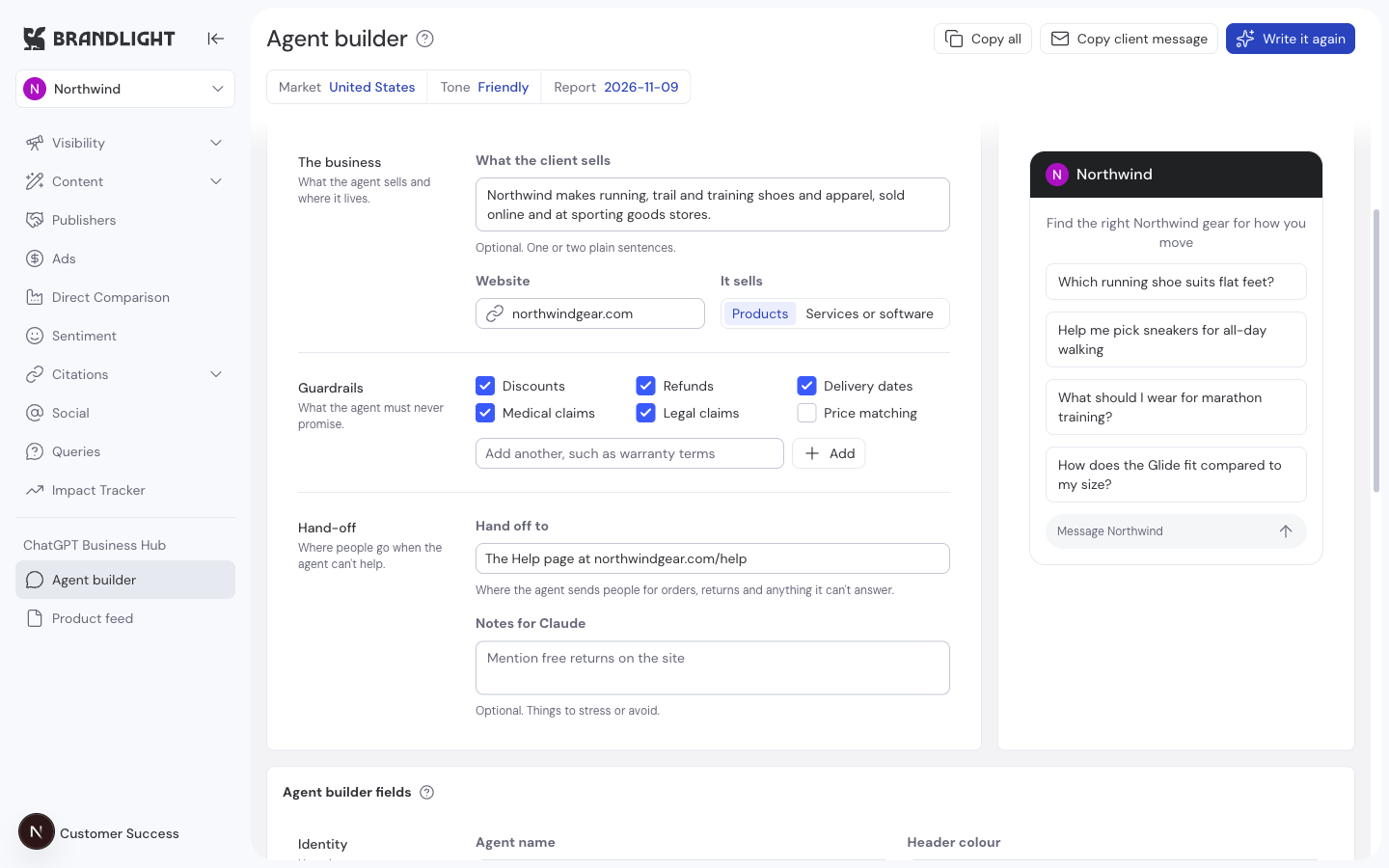
Brandlight's Ads platform lets clients set up the ChatGPT ads that bring their agent into relevant conversations.
How it comes together
Each piece feeds the next. The guide gets the profile live. Catalog Export puts the products in ChatGPT. Agent Instructions builds an agent that knows those products, and knows where the brand is winning or losing in AI answers. The ads bring that agent to buyers, where it moves them toward a decision or a purchase.
An agent written from a generic draft describes your company. An agent built from your visibility data acts on what it shows.
Our CS team runs the catalog and agent setup with each client. Thanks to Yehiam Shealtiel, who built the tools.
Where to start this week: check whether a listing already exists for each of your brands, since OpenAI can create one whether or not you claim it. Ask your legal team to review OpenAI's terms. Name one owner. Then build from what AI engines already say about you.
Subscribe to our newsletter
Get our latest posts delivered straight to your inbox.
By clicking Subscribe you're confirming that you agree with our Terms and Conditions.